For most of my life, astrology felt like a label. A T-shirt. A fridge magnet. A horoscope column. “Capricorn: ambitious, cold, all work, no play.” That was supposed to describe me, but it didn’t. And it led me, like many people, to dismiss astrology almost entirely.
I never thought to explore astrology deeply because, on that surface level, it just didn’t resonate. That magazine-column, sun-sign version of astrology felt too small to hold an actual person.
But now I know better. The problem was not Capricorn, or that I was one. The problem was what had been flattened out of it. A symbol had been pulled from a much larger system, stripped of context, turned into a stereotype, and handed back as an identity.
No wonder it felt wrong.
The internet did not invent this problem, but it has perfected it.
Astrology has always needed shorthand. A symbol has to carry meaning. A sign has to be teachable. A planet has to be named. A technique has to be explained. But shorthand can turn into stereotype very quickly.
Modern astrology does this too, in two very different ways.
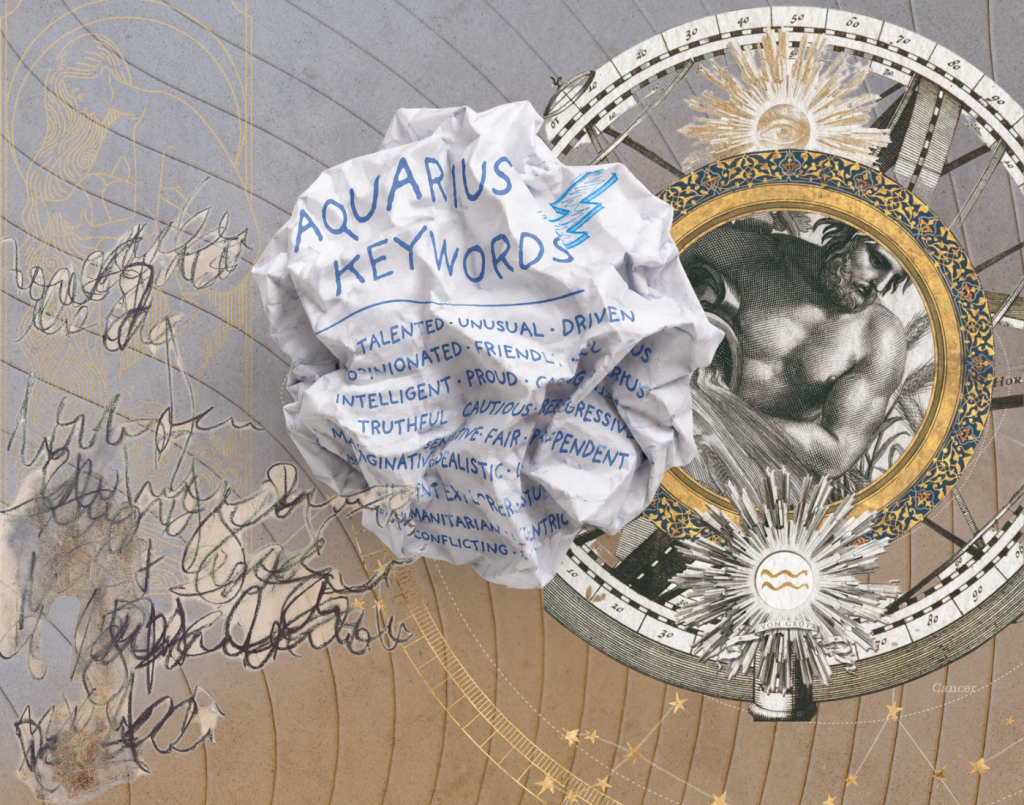
One is commodified astrology: memes, sun-sign columns, personality branding, algorithmic identity shorthand, little lists designed to be instantly shareable.
The other is over-systematized astrology: keywords, fixed delineations, bullet points, rigid categories, technical language so dense that the living person disappears underneath it.
Those are very different environments, but they can create the same problem. The symbol gets isolated. Capricorn becomes cold. Scorpio becomes manipulative. Aquarius becomes detached. Taurus becomes stubborn. Virgo becomes critical.
And somewhere along the way, the archetype gets confused with the stereotype. But an archetype is way bigger than any one expression of it. And, of course, a person is bigger than an archetype.
The safest person I have ever known was a Capricorn.
That sentence has probably done more to change the way I think about astrology than a hundred keyword lists. My lived experience of Capricorn is not primarily coldness at all.
It is warmth, protection, provision, reliability, responsibility, devotion, legacy. Sure, Capricorn can express as distance, rigidity, severity, withholding, ambition, control, or emotional finality. Of course it can. It means those are expressions of an archetype, not the archetype itself.
The same is true elsewhere.
The deepest emotional loyalty I have experienced came through Scorpio.
Aquarius was not an atmosphere of detachment in my life. It was where I felt most recognized and free to be fully myself.
Those experiences do not cancel astrological tradition. They complicate it. And that complication is where the person re-enters the chart.
A placement is not a person.
This sounds obvious, but a surprising amount of astrology forgets it in practice. A Sun sign does not exist alone. Neither does a Moon sign. Neither does Venus. Neither does Saturn. Every placement lives inside an entire chart.
A planet occupies a sign and a house. It forms aspects. It has a ruler. That ruler has its own placement and condition. The planet may sit near an angle and become far more visible in the life. It may be part of a stellium, a grand trine, a square pattern, an opposition axis, a rulership chain, or a larger configuration that changes how its expression is experienced.
It’s meaning is contextual.
So when someone says, “Venus in Aquarius means detached in love,” my immediate questions now are: Which Venus in Aquarius? In what house? At what degree? Conjunct what? Ruled by what? What is the rest of the chart doing? What kind of person is carrying it? What have they actually lived?
That is not me trying to make astrology so subjective that anything can mean anything. It is actually the opposite. Context is what makes an interpretation more precise.
The chart changes the placement.
Take a simple phrase like “Moon in Taurus.”
On its own, that can give us useful information. Taurus has a relationship to stability, embodiment, rhythm, continuity, sensory reality, material conditions, and resistance to abrupt disruption.
But even before we get to the native’s life, the rest of the chart begins changing the texture.
A Taurus Moon conjunct the IC does not operate in exactly the same way as a Taurus Moon in the tenth house. A Taurus Moon opposing Uranus does not feel the same as one trine Saturn. A Taurus Moon ruled by a prominently placed Venus carries that rulership differently than one whose Venus is cadent and heavily pressured.
The placement is real. But it is never alone. This is why astrology begins making sense after you stop reading one symbol at a time.
Because, for me, once I began to understand the system as a whole, I did not suddenly become “more Capricorn.” It was that I finally understood that my Capricorn Sun was not being asked to explain an entire human being by itself.
That was never its job.
Symbolic language is not the problem.
I love symbols. I love archetypes. I love that astrology can compress enormous fields of meaning into a glyph, a sign, an aspect, a house. That compression is one of its great powers.
The problem begins when the shorthand gets mistaken for the whole thing.
A map is useful because it simplifies terrain. But no one mistakes the little green patch on the map for the actual forest.You can’t smell pine needles in a map. You can’t feel the slope under your feet. You can’t know whether the trail is muddy that morning.
The map still matters. It just is not the terrain. Astrology works the same way for me. The symbol points. The person lives. The gap between those two is where interpretation happens.
Embodiment is the missing layer.
What I kept noticing in my own study was that the most useful interpretations were not the ones that gave me more adjectives. They were the ones that helped me recognize how something actually felt to live.
So, rather than, “Taurus Moon likes comfort”, I seek to understand “What does emotional information feel like when the body itself is part of how truth is registered?”
And rather than “Capricorn is responsible”, I prefer to explore, “What does care look like when love is expressed through provision, steadiness, usefulness, keeping promises, fixing the thing that needs fixing?”
And, my personal pet peeve: “Aquarius is detached.” No. Definitely not that. Instead I ask, “What does relationship feel like when belonging does not require possession, sameness, constant emotional performance, or conformity?”
That is a different level of astrology. It does not replace technique. It depends on technique. But the technique has to come all the way down into a life. Otherwise the person is left staring at a pile of accurate facts that somehow still do not feel like them.
The whole chart is the meaning-making environment.
This is the point I wish someone had made clear to me much earlier: You are not twelve signs fighting for control of a personality. You are not a stack of placements. You are not your Sun plus your Moon plus your Rising plus a few spicy aspects.
A birth chart is an interacting field.
Every piece modifies what is around it.
Some placements become louder because of angularity. Some become central because other planets route through them by rulership. Some describe pressure because they are repeatedly contacted through hard aspects. Some operate as part of a cluster and make very little sense when separated from that cluster. Some seem contradictory until the relationship between them is understood.
That last one matters especially.
People are contradictory. Astrology should be able to hold that. A person can crave stability and disrupt it. Need freedom and deeply value commitment. Be emotionally sensitive and intellectually detached. Love people fiercely and still need enormous solitude.
A label has trouble holding those contradictions. A whole chart doesn’t. It can show how all of them belong to the same person.
The person also changes the interpretation.
There is another boundary I care about here. The chart provides symbolic structure. It does not give the astrologer ownership of someone else’s biography. A placement may describe a way of experiencing or processing reality without authorizing a claim about the specific event that caused it. And that’s enormously important.
A Taurus Moon can tell me something about emotional processing, embodiment, rhythm, continuity, and security. It does not automatically entitle me to invent a childhood story to explain it.
A difficult Saturn aspect may describe pressure, restraint, responsibility, fear, delay, authority, structure, or hard-earned maturity. It does not give me permission to declare what happened to the person.
The lived story belongs to the native.
This is one of the reasons I believe astrology works best as a conversation rather than a verdict.
The chart offers structure. The person offers reality. Interpretation happens where they meet.
When the label replaces the person.
I do not care about this because I want everyone to practice astrology in the same way I do. I care because symbols shape the way we understand people.
Once you label someone “an emotionally unavailable Capricorn” or “a manipulative Scorpio” or “a detached Aquarius,” it becomes very easy to stop looking.
The label starts replacing observation. And that is not only bad astrology. It is bad human seeing.
Archetypes should deepen our perception of people, not relieve us of the responsibility to perceive them.
Astrology became meaningful to me when it stopped telling me who someone was and started giving me a language for asking better questions about how they experience life.
That change created more compassion, not less discernment.
Understanding someone’s symbolic architecture does not excuse harm.
It does not erase accountability. It does not make every behavior sacred or inevitable. It simply gives us more dimensions to see. And sometimes another dimension changes everything.
A placement is vocabulary. A chart is syntax.
I keep coming back to language because it is the closest comparison I know.
A single word contains meaning. But a word placed inside a sentence changes. Its relationship to the other words matters. Order matters. Emphasis matters. Context matters. Tone matters.
The same word can carry a different meaning in another sentence without ceasing to be the same word.
That is how I have come to understand placements.
Capricorn is real. Aquarius is real. Venus is real. Saturn is real.
But a placement is vocabulary. A chart is syntax. And a human life is where the language is spoken. Once I understood that, I could no longer see a birth chart as a list. I started seeing relationships. Then systems. Then structure. And eventually, architecture. That is where the next piece begins.
On My Radar
-
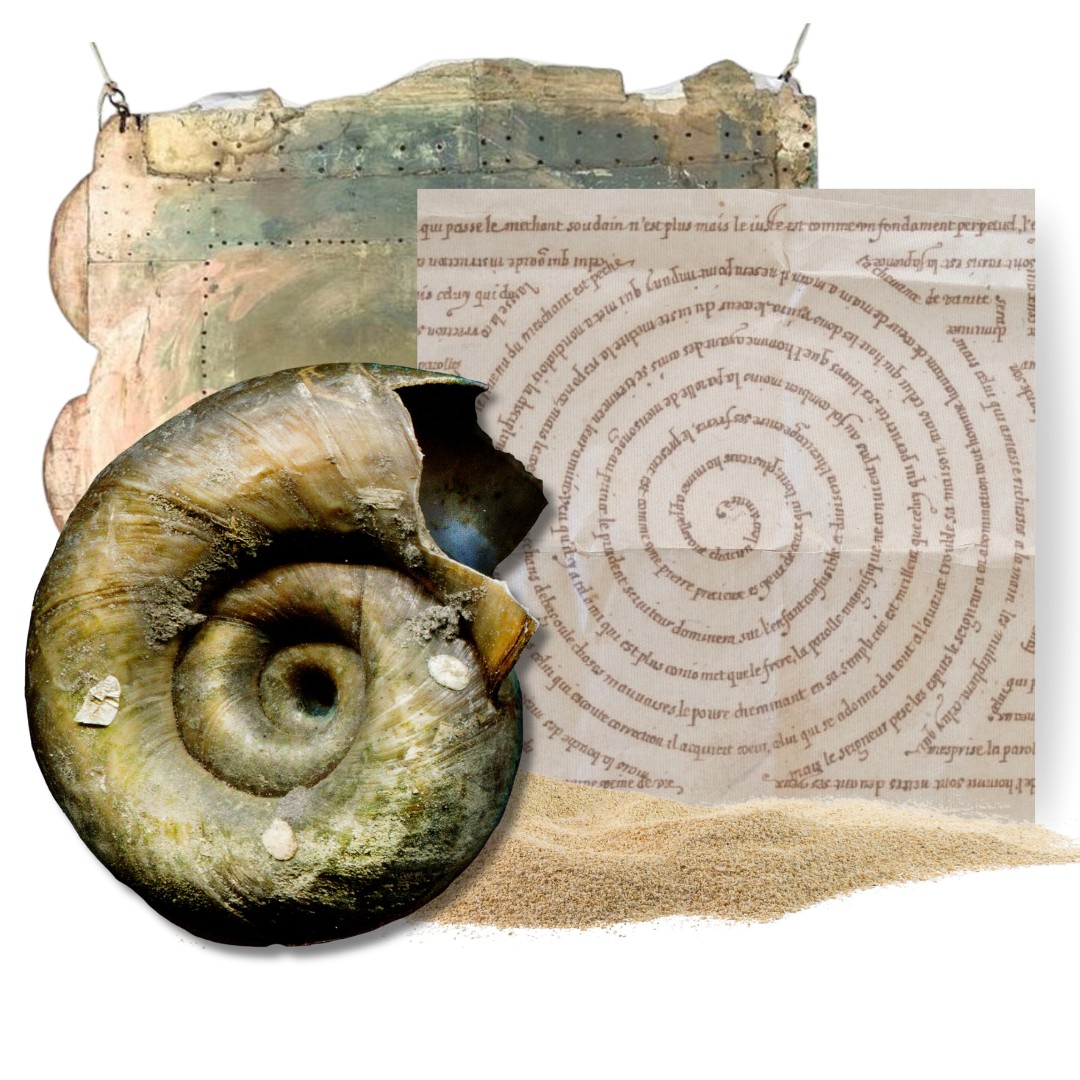
Time is a Spiral
Cycles, recursion, and what keeps showing up
-
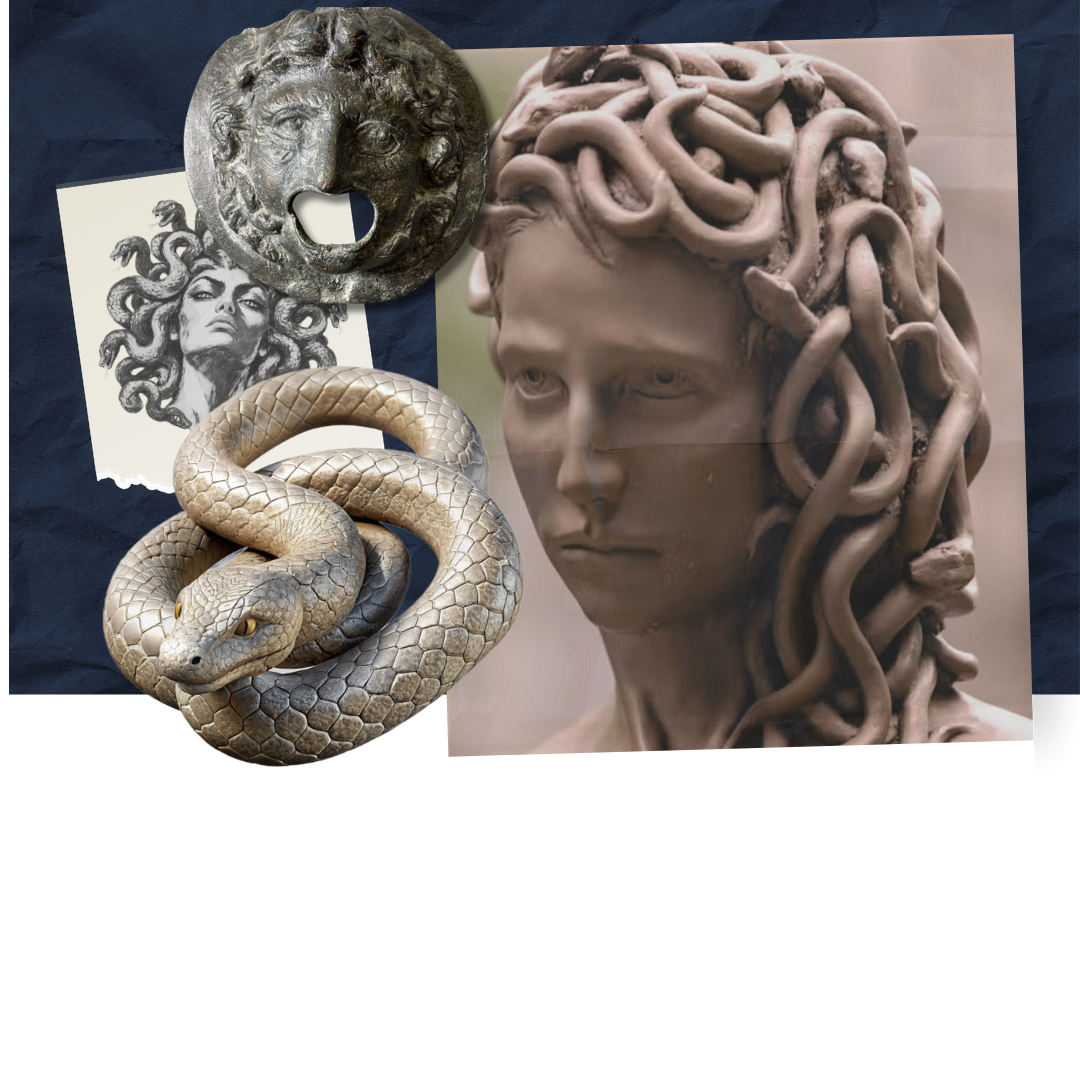
Medusa
A figure of power, fear, protection and profound misunderstanding. I have a soft spot for her.
-

The Hidden Feminine